
MOTION-PHYSICS TNPSC PDF
Learn about Motion – definition, types, laws, and examples. Key Physics concept for TNPSC exams preparation with PDF notes and explanations
MOTION-PHYSICS TNPSC PDF
FAQs on Motion – TNPSC Physics
1. What is Motion?
Motion is the change in the position of an object with respect to time. An object is said to be in motion if it changes its position continuously.
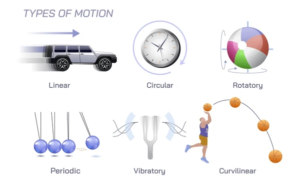
2. What are the types of Motion?
Motion can be classified as linear (straight-line motion), circular (around a fixed point), and oscillatory (to and fro movement).
3. What is the difference between Speed and Velocity?
Speed is the rate of change of distance and is a scalar quantity, while velocity is the rate of change of displacement and is a vector quantity.
4. What is Acceleration?
Acceleration is the rate of change of velocity with respect to time. It indicates how quickly an object speeds up or slows down.
5. What is Uniform and Non-Uniform Motion?
In uniform motion, an object covers equal distances in equal intervals of time. In non-uniform motion, the distances covered in equal time intervals are unequal.
6. What are some real-life examples of Motion?
A moving car on a road, a spinning fan, a swinging pendulum, and a planet revolving around the Sun are examples of different types of motion.


