Consider the following statements regarding Section 7-A of the Hindu Marriage Act (Tamil Nadu Amendment)

Consider the following statements regarding Section 7-A of the Hindu Marriage Act (Tamil Nadu Amendment):

  1. Section 7-A was introduced through the Hindu Marriage (Tamil Nadu Amendment) Act, 1967.
  2. It applies uniformly to all Indian states.
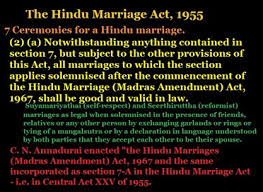
  3. It legally recognises “self-respect” or “suyamariyathai” marriages between two Hindus.

Which of the above statements are incorrect?

EXPLANATION

Statement 2:

“It applies uniformly to all Indian states.”

Incorrect.
This is not correct.
Section 7-A is a state-specific amendment, applicable only in Tamil Nadu (and to a limited extent, Puducherry). It does not apply uniformly across all Indian states. Other states follow only the central provisions of the Hindu Marriage Act, 1955, unless they have made specific amendments.


Statement 3:

“It legally recognises ‘self-respect’ or ‘suyamariyathai’ marriages between two Hindus.”

Correct.
Yes, Section 7-A legally recognises “self-respect” or “suyamariyathai” marriages. These are marriages where no religious ceremonies or priest is required; instead, the couple may solemnize the marriage through simple declarations in the presence of witnesses.


Conclusion:

The incorrect statement is:

🔴 Statement 2

Correct Answer: Statement 2 only is incorrect.

Consider the following statements regarding Section 7-A of the Hindu Marriage Act (Tamil Nadu Amendment):

OTHER SOURCES

0 replies

Leave a Reply

Want to join the discussion?
Feel free to contribute!

Leave a Reply

Copyright - Vijayakumar IAS Academy - Anitta Priyanka Balasubramanian - All Rights Reserved.
Designed & Developed by

Your Cart

Congrats! You get free shipping.

Subtotal
₹0.00
Shipping
Free!
Tax
₹0.00
Total
₹0.00
Product You Might Like